01 / FAMILY
Keep family close
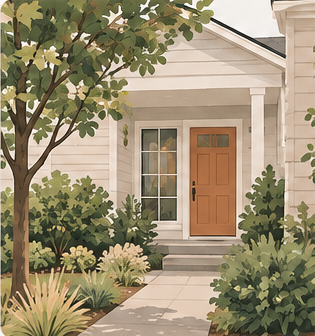
Explore a separate living space where parents or other relatives could have their own front door while remaining nearby.

A little more independence for family. Extra space as life changes. Potential long-term rental income. Maryland's ADU framework has changed, but what is allowed depends on your county, zoning and property. UrbanKind helps homeowners in Montgomery and Prince George's counties understand the options before investing in design or construction.
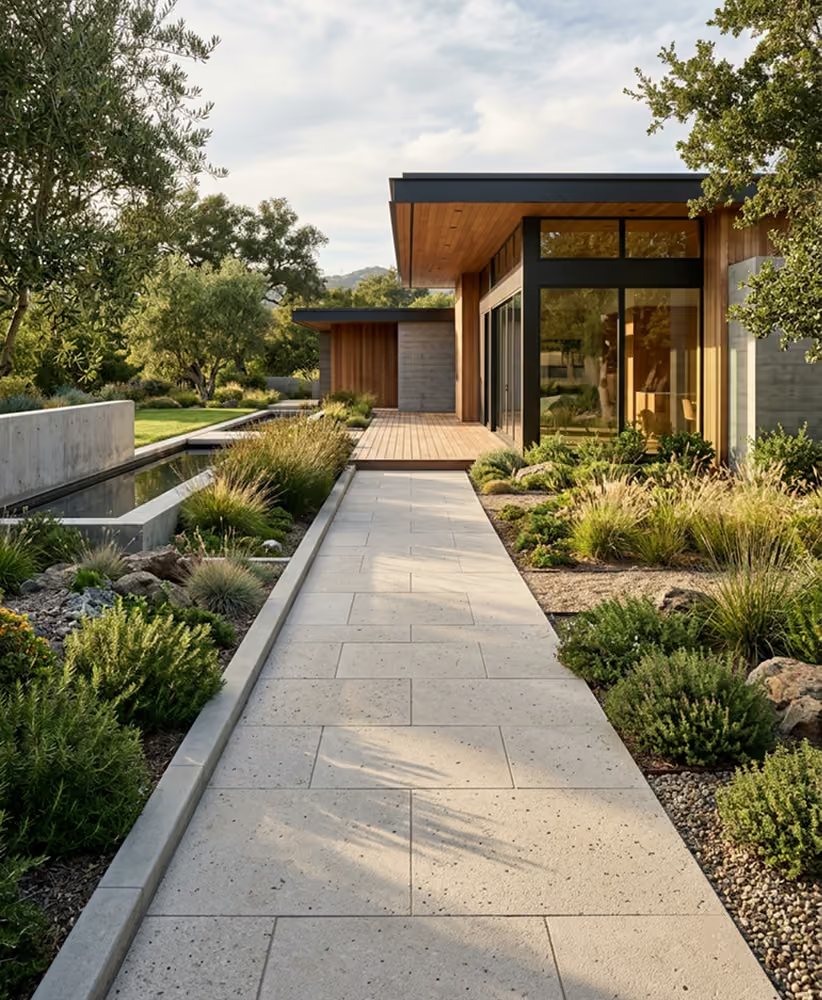
Maryland adopted statewide legislation in 2025 requiring local governments to authorize accessory dwelling units (ADUs) by October 1, 2026. Montgomery County and Prince George's County have adopted their own zoning measures, with different requirements and effective dates. A property-specific zoning review can help identify the rules, limitations and next steps relevant to your idea.
WHY CONSIDER AN ADU?
An accessory dwelling unit can serve different purposes at different stages of life. The first step is understanding whether an ADU concept may work under the zoning rules for your property.
01 / FAMILY
Explore a separate living space where parents or other relatives could have their own front door while remaining nearby.
02 / FLEXIBILITY
A permitted ADU may offer a long-term rental opportunity. Zoning, occupancy, licensing and other requirements can affect its use.
03 / SPACE
Consider an additional self-contained living space as household needs change, without automatically assuming a move is necessary.
These are possible uses, not guarantees. UrbanKind assesses zoning questions, not rental returns, accessibility design, construction costs or permit approval.
An ADU might be created inside a house, through the conversion of an existing structure, or as a new detached unit. Local zoning, building requirements and property conditions determine which concepts are worth exploring.
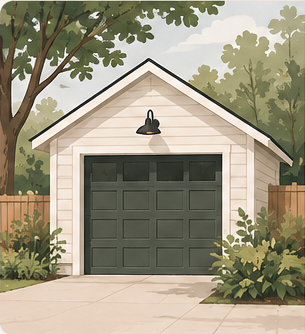
Have a garage, carriage house, or other structure that seems like it could become something more? We can look at the zoning and property conditions that may affect whether a conversion or expansion is possible.
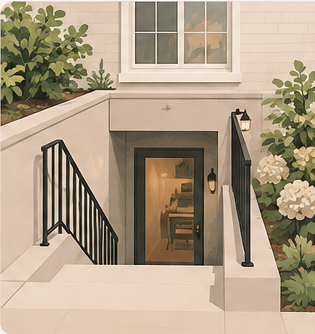
A basement can seem like an obvious place for a separate apartment, but there may be zoning and building considerations to sort through first. An early review can help identify the questions that matter before you start planning the space.
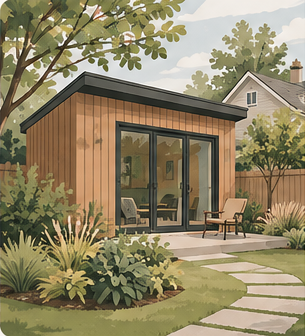
Thinking about building in the rear yard or adding onto an existing structure? We can look at things like setbacks, lot conditions, existing development, and zoning requirements to get a better sense of what may be realistic.
An addition or existing part of a home may be considered for a self-contained living unit. We can identify zoning questions to investigate before pursuing plans, permits or construction estimates.
MARYLAND HOMEOWNERS
UrbanKind currently offers these reviews for properties in Montgomery County and Prince George's County. The counties' ADU ordinances, effective dates, municipal requirements and permitting paths are not identical.
We assess published local ADU zoning standards and relevant property conditions for the agreed concept.
Prince George's County enacted a new ADU zoning ordinance with an effective date of November 16, 2026. We check the rules applicable to your property and the timing of any municipal or permit requirements.
Statewide authorization does not mean every property qualifies. Rules may differ within municipalities; building and rental requirements are separate from zoning eligibility. Maryland ADU law: Land Use §4-504.
An ADU idea may involve use rules, setbacks, height, lot coverage and other restrictions. Our reviews help you identify the zoning questions before commissioning drawings or construction estimates.
Choose a $295 Preliminary ADU Zoning Screen for an initial answer and next step, or a $950 ADU Property Zoning Review for a deeper assessment of one proposed ADU concept. Both are desktop reviews based on available records, not permit approvals or construction feasibility certifications.
TWO WAYS TO GET STARTED
Both options are independent desktop zoning reviews of one agreed ADU concept, based on available public records. Neither is a construction feasibility study or a guarantee of approval.
START WITH THE ESSENTIALS
$295
A first look at the zoning rules and obvious questions affecting your idea.
Not included: buildable-area calculations, detailed exception analysis, agency contact, customized permitting strategy or a meeting.
Ask about the $295 screenFOR A MORE DEVELOPED IDEA
$950
A focused property-specific analysis of one ADU concept and its likely zoning path.
Not included: surveys, architectural test fits, engineering, agency confirmation, applications or permit management. Extra concepts require separate scope.
Ask about the $950 reviewA credit of up to $295 toward the full review may apply if you upgrade within 30 days for the same property and concept and the initial research remains reusable. Eligibility is confirmed before engagement. UrbanKind provides planning and zoning consulting, not legal, architectural or engineering services.
A straightforward process with a clearly defined scope before work begins.

Provide your property address and idea

We assess published zoning standards and available property records within the selected service scope. The $950 review includes supported dimensional analysis where reliable records permit.

Receive a 1–2 page preliminary screen or a focused 4–6 page property zoning memorandum. Each identifies the main findings, limitations and recommended next steps.

The $295 screen includes one clarification email. The $950 review includes a 20-minute review call and one consolidated clarification email within seven days. Additional research or concepts require separate scope.
The $295 Preliminary ADU Zoning Screen identifies key published zoning requirements, readily apparent issues and a recommended next step, without parcel-specific calculations. The $950 ADU Property Zoning Review examines one agreed ADU concept, applies relevant dimensional rules where supported by reliable information and outlines a likely zoning and permitting path.
Both services review published ADU zoning requirements and available property records. The preliminary screen identifies key rules; the detailed review analyzes their application to one proposed concept.
The $950 review includes supported calculations for size, height, setbacks, lot coverage and parking where records permit. Neither service includes a survey, test fit, engineering study or guarantee that the ADU can be built.
Choose a 1–2 page preliminary PDF or a typically 4–6 page focused property zoning memorandum. Findings document sources, limitations and recommended next actions.
The preliminary screen recommends an appropriate next step. The detailed review outlines a likely zoning and permitting sequence and relevant published licensing steps. Agency confirmation, permit management and specialist investigations are separate services.
Neither service includes design, engineering, surveys, legal advice, agency confirmation, utility or septic capacity analysis, permit applications or guarantees of approval.
Your property may involve more than one set of rules, and understanding what matters isn’t always as simple as looking up the zoning.
UrbanKind is led by Brandice Elliott, AICP, an urban planner with more than 20 years of experience in local government, private land use practice, and consulting. Her work has included zoning and development review, entitlements, regulatory analysis, agency coordination, community engagement, and public hearings in Washington, D.C. and other jurisdictions.
That experience helps UrbanKind look beyond a single rule or requirement and focus on the questions most likely to affect your options and what makes sense to do next.
Experience across local government, private land use practice, and consulting, with a practical understanding of how planning and zoning decisions get made.
Experience reviewing projects from the government side and advising project teams from the private side brings a broader perspective to property-specific questions.
Your review focuses on the rules and conditions that matter for your property and your idea, not a generic explanation of ADU requirements.
A review does not need to answer every design or construction question. It should help you understand what planning and zoning questions deserve attention before the project moves further ahead.
No. Maryland's statewide ADU framework does not make every property eligible for every type of unit. County zoning provisions, their effective dates, site restrictions, existing buildings and applicable municipal or permitting requirements may affect the options.
Architects and contractors can be important partners in an ADU project. An early planning review can help you understand the zoning and property questions that may shape what you eventually ask them to design or price.
You need a general direction, such as a detached backyard structure, basement conversion or attached living space. Each paid review evaluates one agreed concept. A brief discovery conversation can help identify the appropriate next step, but is not a free zoning assessment.
No. The review does not guarantee approval or replace later technical work. It helps you understand the early planning questions before larger commitments are made.
Possibly. An ADU can be a way for relatives to live near one another while maintaining separate living space. Our review addresses published zoning and occupancy rules for one proposed concept; accessibility planning, care needs and construction design require other specialists.
A permitted and properly licensed ADU may offer a long-term rental opportunity. Local zoning, owner-occupancy, rental licensing and other requirements can affect how a unit may be used. We review the relevant published rules, but do not forecast rental revenue or investment returns.
Potentially. An attached, converted or detached ADU may create a self-contained living space on the same property. We identify zoning questions for the proposed concept before you commission design work; an ADU is different from a conventional home addition.
No. Both counties operate under Maryland's statewide ADU framework, but their local ordinances, effective dates and permitting requirements differ. Some municipalities may have additional requirements. Our assessment starts with the property's location and rules applicable at that time.
START WITH YOUR ADDRESS
An ADU could support living space for relatives, additional household flexibility, or a possible long-term rental. Tell us about your Maryland property and idea so we can recommend an appropriate level of zoning review.
We start with a brief, no-cost conversation about the appropriate service and its scope. Property-specific zoning research is part of the paid review, not the initial inquiry.
Currently accepting inquiries for properties in Montgomery County and Prince George's County, Maryland. We check the applicable local rules and effective dates before agreeing on the scope of a review.
Provide your address and the county where the property is located. We'll follow up to confirm your proposed ADU concept, the appropriate review and the next steps.