.avif)

KEY TAKEAWAYS
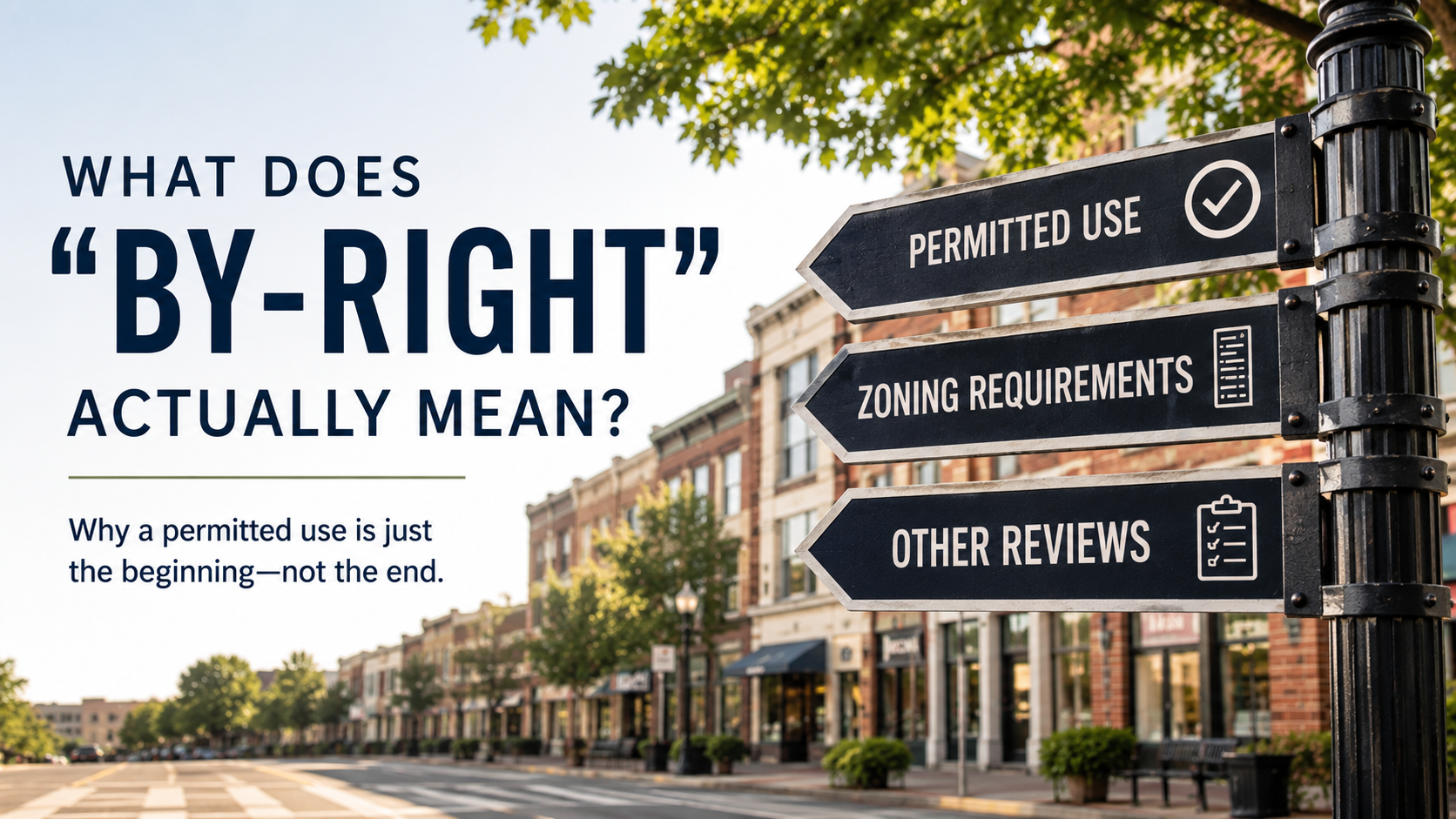
“By-right” generally means a use or project is allowed under the zoning regulations without discretionary zoning relief. It is good news - but it is still a starting point: the proposal must meet the other requirements that apply, and the way a space will actually be used can affect the approval path.
THE PRACTICAL ANSWER
By-Right Is Good News—But It’s Not the End of the Question
If you’ve spent any time talking with a planner, architect, zoning attorney, or real estate professional, you may have heard someone say that a project can be done “by-right.” Usually, that’s good news.
In zoning, “by-right” generally means that a proposed use or project is allowed under the applicable zoning regulations without needing discretionary zoning relief or special approval. But it doesn’t mean automatic approval. There are still rules to follow, and sometimes the real question is figuring out which rules apply to the project in the first place.
A Permitted Use Is the Starting Point
One of the first things to understand about a property is whether the proposed use is allowed. If it’s permitted by-right, you may not need a variance, special exception, rezoning, or another form of zoning relief just to establish the use. That can make the approval path considerably more straightforward. But other requirements may still apply, such as setbacks, building height, lot occupancy, parking or loading, access, historic preservation, building codes, or other regulatory reviews.
Permitted By-Right Is Not the Same as Ready to Proceed
A favorable use determination answers an important question, but not every question. The property, the proposed improvements, and any other required reviews still need to line up with the project you are planning.
“Permitted by-right” and “ready to proceed” aren’t the same thing.
Sometimes the Hardest Question Is: What Is the Use?
- Zoning codes organize activities into defined use categories, but businesses do not always operate in tidy boxes.
- What actually happens in the space matters: who comes to the property, what services are provided, whether products are sold, what equipment is used, and whether anything remains overnight.
- Those operational details can determine which zoning category applies and whether that use is permitted by-right.
APPLIED GUIDANCE
How the Business Operates Matters
This is where things can get tricky. Plenty of businesses don’t operate exactly the way the zoning regulations assume they will. A studio might combine instruction, appointments, retail sales, and occasional events. A pet-related business might provide training, grooming, and retail products, but no boarding. A service business might look a little like retail from the outside but operate almost entirely through scheduled appointments.
1. Start with what actually happens in the space
Describe the day-to-day operation rather than starting with the label you think applies.
2. Compare the operation to the zoning definitions
Look at the activities, customers, equipment, hours, and other details that may shape the use classification.
3. Check the rest of the regulatory path
Confirm whether other zoning standards or regulatory reviews could affect the property, design, or timing.
4. Make sure the application tells the same story
Plans, narratives, and permit materials should clearly and consistently reflect how the project will actually operate.
WHAT THIS MEANS FOR YOUR PROJECT
The goal isn’t to find the right words to make a project fit the regulations. It’s to understand the project well enough to determine how the regulations actually apply.
BEFORE A MAJOR COMMITMENT
Confirm the Path Before Making the Big Commitments
A by-right determination can give you confidence that there is a workable zoning path. But it is still worth understanding the rest of that path before signing a long-term lease, investing heavily in design, purchasing specialized equipment, or making other significant commitments.
You don’t need to have every detail figured out. You do want to know whether the basic assumptions behind the project hold up: Is the use permitted? Does the proposed operation fit that use? Are there other zoning requirements that could affect the project? Are additional reviews or approvals likely? If someone tells you the project is permitted by-right, take the good news, then ask: “Great. What else do we need to confirm?” That’s often where the most useful planning conversation begins.
.avif)
.avif)